Tuesday, January 11, 2011

Clinical Research and Ethics

Today lecture was on the introduction to clinical research and ethics. A speaker from Hospital Ampang, Dr. Sia Koon Ket, who is the Head of Clinical Research Centre has provided us with the definitions of different terms involving clinical research and ethics.

Biomedical research is an area of research which involves using human as experimental subjects. In order to test for the efficacies of drugs and medicines, there is a requirement for human experimentation. Hence there is a protocol which must be adhered to when conducting a clinical trial. We learned the four phases of clinical trials. Also, we learned about ethics of clinical research. This ethics issue is very vital in the case of biomedical research because it involves the potential exploitation or abuse of the human research subjects. Thus the issue of what is being ethical or unethical always persist in the research of drugs and medicines. A great example of human exploitation was the Nazi doctors, which exploited young children and prisoners. All these information were really useful for us in case we enter the biomedical research field.

Today's lecture gave an insight of the various issues of clinical research and ethics we are exposed to. An understanding of different points of view from all sides with the ability to make accurate judgement between morally right or wrong is hence vital to ensure clarity and transparency when conducting a trial in the present as well as in the future.

Monday, January 10, 2011

Intellectual Property - Patents, Copyrights, Trademarks

Intellectual property (IP) is the creations of one’s mind. It includes copyrights, patents, trademarks, industrial design rights and trade secrets. IP protection has been of critical importance in today’s modern world to encourage innovation. This is because IP protection allows ideas to be protected so that businesses would reap maximum benefits of their inventions and would encourage more research and development. Due to the importance of IP, BeST programme has arranged an experienced and reputable speaker Assoc. Prof. Rohazar Wati Zuallcobley from the Faculty of Law, MARA University of Technology, for us students.

She started her lecture by telling us the importance of strong IP for innovation in boosting the national economic growth, and that under the law of IP, exclusive rights of owners to intangible assets such as knowledge and creativity can be granted. We understood the differences between different types of IP, how IP plays a role as economic tools for conversion of innovation into assets, how patents are applied and granted and the several routes to grant a patent.

The second half of her lecture was on trademark as a branding strategy. The lecture became much more interesting when she taught us the ways to differentiate registrable and non-registrable trademarks, as well as the history and function of trademarks. Finally she concluded the lecture with confidential information and trade secret, which allowed us to understand the rationale and history behind them.

Before she ended her lecture, she reminded us on one thing that happens to today’s high-technology world: the digital revolution has made IP become more susceptible to mass copying and zero-cost distribution of digital materials. This will pose a threat to IP and hence each of us should help to fight against piracy and counterfeiting to help the inventors from suffering losses and getting full protection from IP system. May all Malaysians as well as people from other countries will cherish the hard work and creation of great minds.

Friday, January 7, 2011

Secret to Launch a Good Business Idea

Today, our beloved speaker Dr. Roland continued with his lecture on innovation and entrepreneurship. Before he started, he asked the class: ‘How are you?’ Most of us said ‘good’ or ‘fine’. He then said: ‘You all should have said I feel brand new, because it shows enthusiasm in towards your life. This positive attitude is very important to achieve success in either business or life’ He proceeded with the next question: ‘Are you ready?’ We replied with a yes. Again he said: ‘You all should have said I was born ready. This shows that you are really prepared for what is coming up next. Again this shows enthusiasm and positive attitude which all of you should have.’ This showed why I enjoy his lesson so much, because we always learn new things from him, even at the beginning of his lecture.
We started our lecture on discussing a case study named ‘Nothing Unique to Offer’. This case study involved a business man wanting to venture into a pizza business near a local university even when there are three existing competitors. After each group has presented their solution to the case study problem, he pointed out our good and bad points which have benefited everyone of us in order to practically apply the two concepts he taught yesterday, which were importance versus interesting and NABC approach (N = need, A = approach, B = benefits per costs, C = Competition/alternatives).

The lecture continued with more interactive sessions with the most interesting session being the ‘Elevator Pitch’. An ‘Elevator Pitch’ means a 30 to 60 seconds well-practiced and succinct description of our company that your mother or even your grandmother can understand during the time it would needed to ride up an elevator. It is something like the lyrics of Eminem’s ‘Lose Yourself’:

Look, if you had one shot…

One opportunity to seize everything you ever wanted…

One moment…

Would you capture it…

Or just let it slip away?

Why should an entrepreneur need to put great emphasis on ‘Elevator Pitch’? This is simply because it can help to figure out what is at the core of a person’s business. Dr. Roland continued with the three main components of Elevator Pitch: Hook à NABC à Close. Each group has to present its product with the aim to kill during Elevator Pitch. Some groups did really very good job and were praised by the speaker and the crowds.

Yesterday and today’s lectures were really very valuable as we learned to think and act like an entrepreneur. The lectures also encouraged us to allow our business idea juices to flow. Thank you Dr. Roland, for making the lectures interesting and inspiring. Kudos to you!


Thursday, January 6, 2011

Are You Innovative Enough To Be An Entrepreneur?

‘Do you know that in Malaysia, there are many unemployed youth, and that the number has been increasing substantially?’ This was the question raised by our speaker of the day, Dr Roland Xavier. He continued: ‘Being a science graduates, you too can be entrepreneurs.’

Dr Roland started his lecture by telling us the importance of innovation in order to be a successful entrepreneur. He told us that many people always confused the terms creativity and innovation. Creativity means coming up with new ideas, whilst innovation means bringing ideas to life. As science involves the conversion of money into knowledge, innovation involves the conversion of knowledge into money. Hence in order to market a product, it is not about coming out with a new idea or coming out with a new scientific theory, but how we convert all these ideas and theories into marketable products or services that can generate wealth. His lecture did not fail to amaze the class as he told us the difference between important and interesting in selling a product or service. He explained that only important products that keep customers’ needs addressed can help to keep a business survive. This is because it can generate higher profit as customers are willing to pay a premium for solutions. On the other hand, interesting products usually are unnecessary products in daily life because there are not “solving the customers’ pain”, and hence the chances of a company selling interesting products, such as magazine company, will be less likely to survive in the twenty-first century.

After attending his lecture, I learned to think like an entrepreneur, and understand that it is innovation-led businesses which will eventually lead to business success. I am looking forward to attending tomorrow’s class to gain more valuable knowledge from the second part of his lecture.

Industrial Visit to Stellagen Sdn. Bhd.

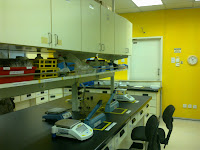
Yesterday, we students of BeST programme were divided to two groups for industrial visit. Each group visited a biotechnology company. The two companies were Stellagen Sdn. Bhd. and Inno Biologics (InnoBio) Sdn. Bhd. I was assigned the group which paid a visit to Stellagen.

Stellagen is a biotechnology company that markets StellarLacTM, which has gone through a 12 years research in University Putra Malaysia.

This product is a multi-strain probioti that consists of four species of Lactobacillus, namely L. brevis, L. salivarius, L. gallinarun and L. reuteri, which are isolated from the natural microflora in the intestines of healthy chickens.

Probiotic is defined as a substance that contains bacteria that are beneficial to the host organism. Conventionally, antibiotic growth promoters (AGPs) were incorporated into chicken feed to improve health and growth of chickens. However AGPS were banned from being used as animal feed in several countries due to three main concerns: (1) causing antibiotic leftover in chicken products, (2) resulting in antibiotic-resistant bacteria flourish in the chickens, and (3) leading to higher antibiotic-resistant human diseases. Hence, this product containing probiotics are natural substitutes for antibiotic growth promoters. This company has been established in 2002 by Mr. Nur Hilmy Ahmad with five to ten employees.

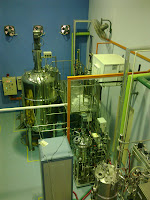
A visit to Stellagen was an eye-opening experience. As the Chinese saying goes: thousands of miles of traveling is better than so many books' reading, the manufacturing process of the company was understood after the industrial trip. The process was divided into four stages: fermentation, centrifugation, freeze-drying, and packaging. Each step has to be conducted carefully to increase survival rate of living bacteria.

The importance of intellectual property in a company that markets products of innovative ideas to safeguard its product from being infringed by unscrupulous parties was also learned. In addition, the vital elements to start up a business were comprehended, which are a good idea or product, skills, motivation, determination, confidence, education and experience.

In a nutshell, this industrial visit provided an insight on how a biotechnology company works and helpful information related to practical facets which cannot be envisaged in lectures. Be Bold. Be Daring. Shoot for the Moon. This will be the motto for one to be successful in setting up a company.

Monday, January 3, 2011

Innovation - The Key to Business Success

Here comes the first day of 2011 to attend BeST program. Today our topic is on innovation. Our speaker started the class on teaching us how to force relate a product to a random word that is at first impression has no connection at all. For example to relate Cakar Ayam, which is a Malays snack, with ice-cream. Perhaps introducing an ice-cream like Cakar Ayam, or perhaps Cakar Ayam of various flavours, just like ice-cream. Later, each group was asked to come out with a product and force relate the product with a random word in a dictionary. Our group was given the word cobweb and our product is a USB drink warmer. Thus our project was designed to look like a cobweb and will 'trap' the mug once it is placed on the center of the hotplate of the drink warmer.

Another interesting session of today was briani rice cooking and bread baking. We were told that the conventional method of cooking briani rice would be to fry the rice with the ingredients. But today we did it in a very convenient and time-efficient way: by putting all the ingredients into the rice cooker, then placing it into a microwave and wait for 10 minutes. The rice was nice, and everyone had some of it as an 'appetizer' for lunch, as shown in the photos below.


The experience of learning through practically is so much fun and entertaining. If not for this program I wonder if I get so much fun while attending class. I am looking forward to attending more interesting days to come in this program.

Sunday, January 2, 2011

2011: Dawn of the New Decade

Here comes an end of year 2010, and the starting of year 2011. Time flies so fast, and the last decade has just marked a full-stop. Entering the new decade, I ponder: What have I achieved throughout the past ten years? What have I learned? What is my passion in life?

Looking back envisioning all that I have done within the past ten years, back when I was in secondary school, to college, and to university, my life has been full of colours. These years have been moulding me from a happy-go-lucky girl-next-door to a confident and independent young lady.

Back to ten years ago, I was still a child of 13 years old full of ignorance and innocence. My secondary life has been a huge transition in my life. Being a student leader, I acquired social and leadership skills; being a debater, it has taught me conceptual skills and the self- confidence; learning Yamaha Electone, I began to understand the beauty of different melodies and the magical wonders of using both left and right brains.

When I stepped into college to pursue A-levels, life has been even more exciting. Juggling between studies and extra-curricular activities has been challenging yet rewarding. Not only that I had to achieve good grades to maintain my scholarship, I was the President of Chinese Cultural Society. From there I learned to do things in a systematic manner, handling things in an impromptu manner and deliver promises within time constraint. All these soft skills can only be learned by experience and mistakes. What does not kill me can only make me stronger. Not only that, I got the chance to take part in several cultural dances and even Latin dance! It has been an unforgettable chapter of my life.

Moving on the undergraduate studies, I found my passion in life – to embark on education or career that will eventually lead me to helping others, especially the underprivileged populations, in terms of their basic needs such as food and water. I realized how fortunate I am to live in a country with rich natural resources, abundant rainfall and fertile lands. An agricultural biotechnology student, I hope that I can improve the nutrition values and productivity of crops. This has been my dream and right now, the flame of passion ignited in my heart continues to burn even brighter. I have a dream and I have the courage to be who I really want to be.

Being just a fresh Monash graduate last December, I looked forward to exploring the world full of excitement, and voila, I was selected for the BeST program. Being the only Chinese race in the program, it taught me that no matter what colour of our skin, or what language we speak, we share the common aim – the love for our country Malaysia. We study together, play together, work together, joke together, these are such precious moments which I have never experience before.

Now, I still left with two months of soft-skill training and three months of internship under BeST program. I am anticipating with the subsequent courses and training. I foresee myself as someone who will be very successful, not in terms of monetary value, but self-satisfaction, because I will equip with valuable knowledge of communication, technical and entrepreneurship throughout this program, which will help me to be a highly qualified person in the world of agriculture and biotechnology.