Monday, February 7, 2011

Organizational Capabilities and Competitive Analysis

Today is the first day of class for our BeST program in the rabbit year, if we consider the starting of a year based on lunar calender. After a week of Chinese New Year celebration, all of us had to bid farewell to holiday and focused on the very last month of lecture classes under the BeST program.

Organizational Capabilities and Competitive Analysis. This is the topic of the day. Assoc. Prof. Dr Dewi Amat Sapuan and Assoc. Prof. Dr. M. Shanmugam started the lecture by introducing five organization's resources: financial, physical, human capital, technological and reputational. Regardless of the type of resources, the major factor of succeeding in the market is organizational capabilities, which is the ability to bring a product in the market faster than its competitors by integrating each individual resources to create competitive advantage. Competitive advantage is vital for a firm in order to outperform its competitors because the implementation of value-creating strategy allows sustainability of a firm in the market in the long run.

We also learned the Porter's Five Forces Model, which permits us to understand where the strength of a firm lies in the business situation. This learning is particularly useful to us whose going to be entrepreneurs in near future as it stimulates us to critically analyze the potential capabilities of a firm in a particular industry.

Throughout today's lecture, we gained insights on the importance of organizational capabilities and competitive advantages for a firm. Every lecture of this program is a building block for us to step nearer to be a successful entrepreneur. I am looking forward to participating in more exciting topics and activities...

Monday, January 31, 2011

Research Field Trip in Kuching, Sarawak

Finally, I have returned to my lovely home sweet home from Kuching. Last two weeks I have been to Kuching for a research trip under the supervision of my beloved lecturer Dr. Catherine Yule from Monash University, which refrained me from having the time to blog for two weeks. I need to conduct an experiment under a research project that entitled: 'Comparison of Phenolic Production in Ant Inhabited and Uninhabited Macaranga pruinosa trees in Peat Swamps'. The purpose of this project is to determine the production of phenolic compounds in plants inhabited by ants comparing them to uninhabited ones. Hence I need to fly to several national parks in Kuching, namely Bako, Kubah and Gunung Gading National parks to collect some samples.


It was a wonderful and memorable experience as it was my first field trip to forests, and I got the chance to see a real Rafflesia flower of 68 cm which had blossomed for 4 days.

We were so lucky to see one as it only blossom for a week after 9 months of maturation or the so-called 'pregnancy' period. Furthermore, we managed to see all sorts of exotic and endangered wildlife animals, such as gibbons, orang utans, bear cats, etc. The wonderful memories I had were indescribable. The lifestyle in Kuching is just so peaceful. It is just so different from the hustle-bustle city as in KL, a place where I stay for 23 years.


Now that I have returned home, back to KL, nevertheless I will treasure the wonderful memories of the life in Kuching. Hopefully I can go back to Kuching in near future.

As Chinese New Year is coming real soon, I was told by my lovely classmate Yassin that we were given one week holiday till 7th February. It shall be another wonderful memories as I will be celebrating this new year with my family, relatives and friends. Am looking forward for this festive season to come...

Friday, January 14, 2011

Clinical Data Management and Biostatisticians

In clinical research, a tool called clinical data management system (CDMS) is used to handle the data of a clinical trial. The data will be gathered from the investigator in case report form, which are then stored in the CDMS. Proper storage and good management of these data are vital in the pharmaceutical industry in order to provide high quality and reliability of the data results. The reason why quality is of essence in this industry is because poor quality will mean a postponement in the development of drug and introduction to the market, which will eventually bring about huge loss to the pharmaceutical companies.

For these reasons, the fifth session introduced us to clinical data management. Although I could not attend the session because I need to attend research field trip briefing at university, I took the initiative to study this topic by myself and obtained information online.

I learned that to produce quality clinical data management and to ensure process improvements, ongoing quality checks which draw attention to the probability of error estimation and error minimization should be carried out. Full commitment should be made by institutions and organizations when handling clinical data to ensure data are stored appropriately and suitably for later use. Nevertheless, this is not always the case as it could be relatively costly to do systematic curation as it not only involves carrying out good and reproducible science, but also about integrating the data from various sources and applying them in novel ways.

When reaches the end of the clinical trial, data collected in the CDMS has to be sent to the statisticians to analyze the data before sending to the regulatory authorities for approval. This is when biostatisticians come into the picture of clinical research. Biostatisticians play a significant role in phase I trial to permit clinical researchers to produce accurate inferences from acquired data and to deduce sound decisions when uncertainty is present. Statistical planning as well as analysis which are done with high accuracy will ensure that the reporting and documentations are delivered with high-quality. Because of the importance of biostatisticians in clinical research, guidelines by the Royal Statistical Society have been set up.

In a nutshell, the field of clinical research require cooperation from many parties and organizations to ensure a high-quality finishing result. I really glad I am part of this BeST programme which covers not only biotechnology field but clinical research field to provide insight in this rapidly expanding field, which will generate plenty of exciting opportunities for the trained professionals.

Wednesday, January 12, 2011

Clinical Research - A Potential Market in Malaysia

Clinical trials have been very crucial when it comes to research and development of new drugs and treatments. With Asia booming as the power house in pharmaceutical sector, it is of no surprise that Malaysian government is joining other Asian countries in tapping into this sector.

Malaysia is one of the countries in Asia which has everything to offer when it comes to pharmaceutical research and development, be it the clinical trials or the facilities. Yet, Malaysia seems to be bypassed by foreign investors due to the lack of publicity as well as some problems that happen in Malaysia, such as delayed timelines, bureaucracy, and long approval processes.

In order to succeed in this industry, BeST programme has incorporated clinical research into the technical module. The first two sessions were on IP and ethics. Moving on to the third day, the session got much more challenging and informative.

We studied the role of sponsors for clinical trials. The sponsors have to select for capable candidates as investigators. Application for licenses, quality control and quality assurance are also sponsor’s responsibilities to ensure that clinical protocols and designs are carried out with accordance to the standard procedures and to ensure that the produced results are reliable.

Next, we also were taught on good clinical practice (GCP). This is a crucial part under clinical trials because trials involve human patients. GCP plays a very crucial role in protecting the human subjects from being exploited. This is when informed consent comes into the picture, where each human participant has the right to decide whether or not to participate. Since informed consent is not a contract, participants have the right to withdraw from the trial at any time.

The session ended with the importance of safety reporting, which more specifically known as adverse event reporting. This reporting system is very important because it takes into account the ethical and legal responsibilities in obtaining and analyzing safety details. Furthermore, it permits effective communication of correct information to regulators, physicians as well as the consumers.

From the session, it was understood that healthcare and clinical research have great potential in Malaysia. It is enlightening that the government has taken extra measures to strengthen the human resource force by incorporating this session into BeST programme. It is time for the government to take prompt action to build up experience healthcare professionals. If no concrete steps are taken, we will lose out. It is time for us to sit tight, be bold and move forward.

Tuesday, January 11, 2011

Clinical Research and Ethics

Today lecture was on the introduction to clinical research and ethics. A speaker from Hospital Ampang, Dr. Sia Koon Ket, who is the Head of Clinical Research Centre has provided us with the definitions of different terms involving clinical research and ethics.

Biomedical research is an area of research which involves using human as experimental subjects. In order to test for the efficacies of drugs and medicines, there is a requirement for human experimentation. Hence there is a protocol which must be adhered to when conducting a clinical trial. We learned the four phases of clinical trials. Also, we learned about ethics of clinical research. This ethics issue is very vital in the case of biomedical research because it involves the potential exploitation or abuse of the human research subjects. Thus the issue of what is being ethical or unethical always persist in the research of drugs and medicines. A great example of human exploitation was the Nazi doctors, which exploited young children and prisoners. All these information were really useful for us in case we enter the biomedical research field.

Today's lecture gave an insight of the various issues of clinical research and ethics we are exposed to. An understanding of different points of view from all sides with the ability to make accurate judgement between morally right or wrong is hence vital to ensure clarity and transparency when conducting a trial in the present as well as in the future.

Monday, January 10, 2011

Intellectual Property - Patents, Copyrights, Trademarks

Intellectual property (IP) is the creations of one’s mind. It includes copyrights, patents, trademarks, industrial design rights and trade secrets. IP protection has been of critical importance in today’s modern world to encourage innovation. This is because IP protection allows ideas to be protected so that businesses would reap maximum benefits of their inventions and would encourage more research and development. Due to the importance of IP, BeST programme has arranged an experienced and reputable speaker Assoc. Prof. Rohazar Wati Zuallcobley from the Faculty of Law, MARA University of Technology, for us students.

She started her lecture by telling us the importance of strong IP for innovation in boosting the national economic growth, and that under the law of IP, exclusive rights of owners to intangible assets such as knowledge and creativity can be granted. We understood the differences between different types of IP, how IP plays a role as economic tools for conversion of innovation into assets, how patents are applied and granted and the several routes to grant a patent.

The second half of her lecture was on trademark as a branding strategy. The lecture became much more interesting when she taught us the ways to differentiate registrable and non-registrable trademarks, as well as the history and function of trademarks. Finally she concluded the lecture with confidential information and trade secret, which allowed us to understand the rationale and history behind them.

Before she ended her lecture, she reminded us on one thing that happens to today’s high-technology world: the digital revolution has made IP become more susceptible to mass copying and zero-cost distribution of digital materials. This will pose a threat to IP and hence each of us should help to fight against piracy and counterfeiting to help the inventors from suffering losses and getting full protection from IP system. May all Malaysians as well as people from other countries will cherish the hard work and creation of great minds.

Friday, January 7, 2011

Secret to Launch a Good Business Idea

Today, our beloved speaker Dr. Roland continued with his lecture on innovation and entrepreneurship. Before he started, he asked the class: ‘How are you?’ Most of us said ‘good’ or ‘fine’. He then said: ‘You all should have said I feel brand new, because it shows enthusiasm in towards your life. This positive attitude is very important to achieve success in either business or life’ He proceeded with the next question: ‘Are you ready?’ We replied with a yes. Again he said: ‘You all should have said I was born ready. This shows that you are really prepared for what is coming up next. Again this shows enthusiasm and positive attitude which all of you should have.’ This showed why I enjoy his lesson so much, because we always learn new things from him, even at the beginning of his lecture.
We started our lecture on discussing a case study named ‘Nothing Unique to Offer’. This case study involved a business man wanting to venture into a pizza business near a local university even when there are three existing competitors. After each group has presented their solution to the case study problem, he pointed out our good and bad points which have benefited everyone of us in order to practically apply the two concepts he taught yesterday, which were importance versus interesting and NABC approach (N = need, A = approach, B = benefits per costs, C = Competition/alternatives).

The lecture continued with more interactive sessions with the most interesting session being the ‘Elevator Pitch’. An ‘Elevator Pitch’ means a 30 to 60 seconds well-practiced and succinct description of our company that your mother or even your grandmother can understand during the time it would needed to ride up an elevator. It is something like the lyrics of Eminem’s ‘Lose Yourself’:

Look, if you had one shot…

One opportunity to seize everything you ever wanted…

One moment…

Would you capture it…

Or just let it slip away?

Why should an entrepreneur need to put great emphasis on ‘Elevator Pitch’? This is simply because it can help to figure out what is at the core of a person’s business. Dr. Roland continued with the three main components of Elevator Pitch: Hook à NABC à Close. Each group has to present its product with the aim to kill during Elevator Pitch. Some groups did really very good job and were praised by the speaker and the crowds.

Yesterday and today’s lectures were really very valuable as we learned to think and act like an entrepreneur. The lectures also encouraged us to allow our business idea juices to flow. Thank you Dr. Roland, for making the lectures interesting and inspiring. Kudos to you!


Thursday, January 6, 2011

Are You Innovative Enough To Be An Entrepreneur?

‘Do you know that in Malaysia, there are many unemployed youth, and that the number has been increasing substantially?’ This was the question raised by our speaker of the day, Dr Roland Xavier. He continued: ‘Being a science graduates, you too can be entrepreneurs.’

Dr Roland started his lecture by telling us the importance of innovation in order to be a successful entrepreneur. He told us that many people always confused the terms creativity and innovation. Creativity means coming up with new ideas, whilst innovation means bringing ideas to life. As science involves the conversion of money into knowledge, innovation involves the conversion of knowledge into money. Hence in order to market a product, it is not about coming out with a new idea or coming out with a new scientific theory, but how we convert all these ideas and theories into marketable products or services that can generate wealth. His lecture did not fail to amaze the class as he told us the difference between important and interesting in selling a product or service. He explained that only important products that keep customers’ needs addressed can help to keep a business survive. This is because it can generate higher profit as customers are willing to pay a premium for solutions. On the other hand, interesting products usually are unnecessary products in daily life because there are not “solving the customers’ pain”, and hence the chances of a company selling interesting products, such as magazine company, will be less likely to survive in the twenty-first century.

After attending his lecture, I learned to think like an entrepreneur, and understand that it is innovation-led businesses which will eventually lead to business success. I am looking forward to attending tomorrow’s class to gain more valuable knowledge from the second part of his lecture.

Industrial Visit to Stellagen Sdn. Bhd.

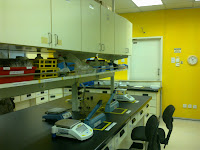
Yesterday, we students of BeST programme were divided to two groups for industrial visit. Each group visited a biotechnology company. The two companies were Stellagen Sdn. Bhd. and Inno Biologics (InnoBio) Sdn. Bhd. I was assigned the group which paid a visit to Stellagen.

Stellagen is a biotechnology company that markets StellarLacTM, which has gone through a 12 years research in University Putra Malaysia.

This product is a multi-strain probioti that consists of four species of Lactobacillus, namely L. brevis, L. salivarius, L. gallinarun and L. reuteri, which are isolated from the natural microflora in the intestines of healthy chickens.

Probiotic is defined as a substance that contains bacteria that are beneficial to the host organism. Conventionally, antibiotic growth promoters (AGPs) were incorporated into chicken feed to improve health and growth of chickens. However AGPS were banned from being used as animal feed in several countries due to three main concerns: (1) causing antibiotic leftover in chicken products, (2) resulting in antibiotic-resistant bacteria flourish in the chickens, and (3) leading to higher antibiotic-resistant human diseases. Hence, this product containing probiotics are natural substitutes for antibiotic growth promoters. This company has been established in 2002 by Mr. Nur Hilmy Ahmad with five to ten employees.

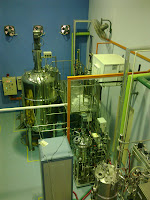
A visit to Stellagen was an eye-opening experience. As the Chinese saying goes: thousands of miles of traveling is better than so many books' reading, the manufacturing process of the company was understood after the industrial trip. The process was divided into four stages: fermentation, centrifugation, freeze-drying, and packaging. Each step has to be conducted carefully to increase survival rate of living bacteria.

The importance of intellectual property in a company that markets products of innovative ideas to safeguard its product from being infringed by unscrupulous parties was also learned. In addition, the vital elements to start up a business were comprehended, which are a good idea or product, skills, motivation, determination, confidence, education and experience.

In a nutshell, this industrial visit provided an insight on how a biotechnology company works and helpful information related to practical facets which cannot be envisaged in lectures. Be Bold. Be Daring. Shoot for the Moon. This will be the motto for one to be successful in setting up a company.

Monday, January 3, 2011

Innovation - The Key to Business Success

Here comes the first day of 2011 to attend BeST program. Today our topic is on innovation. Our speaker started the class on teaching us how to force relate a product to a random word that is at first impression has no connection at all. For example to relate Cakar Ayam, which is a Malays snack, with ice-cream. Perhaps introducing an ice-cream like Cakar Ayam, or perhaps Cakar Ayam of various flavours, just like ice-cream. Later, each group was asked to come out with a product and force relate the product with a random word in a dictionary. Our group was given the word cobweb and our product is a USB drink warmer. Thus our project was designed to look like a cobweb and will 'trap' the mug once it is placed on the center of the hotplate of the drink warmer.

Another interesting session of today was briani rice cooking and bread baking. We were told that the conventional method of cooking briani rice would be to fry the rice with the ingredients. But today we did it in a very convenient and time-efficient way: by putting all the ingredients into the rice cooker, then placing it into a microwave and wait for 10 minutes. The rice was nice, and everyone had some of it as an 'appetizer' for lunch, as shown in the photos below.


The experience of learning through practically is so much fun and entertaining. If not for this program I wonder if I get so much fun while attending class. I am looking forward to attending more interesting days to come in this program.

Sunday, January 2, 2011

2011: Dawn of the New Decade

Here comes an end of year 2010, and the starting of year 2011. Time flies so fast, and the last decade has just marked a full-stop. Entering the new decade, I ponder: What have I achieved throughout the past ten years? What have I learned? What is my passion in life?

Looking back envisioning all that I have done within the past ten years, back when I was in secondary school, to college, and to university, my life has been full of colours. These years have been moulding me from a happy-go-lucky girl-next-door to a confident and independent young lady.

Back to ten years ago, I was still a child of 13 years old full of ignorance and innocence. My secondary life has been a huge transition in my life. Being a student leader, I acquired social and leadership skills; being a debater, it has taught me conceptual skills and the self- confidence; learning Yamaha Electone, I began to understand the beauty of different melodies and the magical wonders of using both left and right brains.

When I stepped into college to pursue A-levels, life has been even more exciting. Juggling between studies and extra-curricular activities has been challenging yet rewarding. Not only that I had to achieve good grades to maintain my scholarship, I was the President of Chinese Cultural Society. From there I learned to do things in a systematic manner, handling things in an impromptu manner and deliver promises within time constraint. All these soft skills can only be learned by experience and mistakes. What does not kill me can only make me stronger. Not only that, I got the chance to take part in several cultural dances and even Latin dance! It has been an unforgettable chapter of my life.

Moving on the undergraduate studies, I found my passion in life – to embark on education or career that will eventually lead me to helping others, especially the underprivileged populations, in terms of their basic needs such as food and water. I realized how fortunate I am to live in a country with rich natural resources, abundant rainfall and fertile lands. An agricultural biotechnology student, I hope that I can improve the nutrition values and productivity of crops. This has been my dream and right now, the flame of passion ignited in my heart continues to burn even brighter. I have a dream and I have the courage to be who I really want to be.

Being just a fresh Monash graduate last December, I looked forward to exploring the world full of excitement, and voila, I was selected for the BeST program. Being the only Chinese race in the program, it taught me that no matter what colour of our skin, or what language we speak, we share the common aim – the love for our country Malaysia. We study together, play together, work together, joke together, these are such precious moments which I have never experience before.

Now, I still left with two months of soft-skill training and three months of internship under BeST program. I am anticipating with the subsequent courses and training. I foresee myself as someone who will be very successful, not in terms of monetary value, but self-satisfaction, because I will equip with valuable knowledge of communication, technical and entrepreneurship throughout this program, which will help me to be a highly qualified person in the world of agriculture and biotechnology.

Thursday, December 30, 2010

How to Unleash Your Creative Juice

Here comes the end of our first module on communication skills, and we are now entering the second module on creativity and innovation. Yesterday I did not attend the class as I need to attend an interview. Luckily I managed to catch up today, with our speaker Prof. Barjoyai Bardai, who has graduated from Harvard University, taught us about creative thinking techniques.

The first session of the class was on six thinking hats. This thinking tool was initially invented by Edward de Bono, which is a powerful technique used to scrutinize decisions from various perspectives. It is very useful in everyday's life, especially at work, as it forces us to thinking out of the box and move outside of our habitual thinking style so that we can gain a better overview of a particular situation.

The six thinking hats are:
White Hat: focuses on known facts and information
Red Hat: focuses on feelings, emotions and intuition
Yellow Hat: focuses on positive perspectives and benefits as to why something may work
Black Hat: focuses on negative perspectives and problems that may arise as to why something may not work
Green Hat: focuses on ideas and solutions by unleashing our creativity
Blue Hat: focuses on the system and action plans to make things work

Additionally, our trainer added the seventh thinking hat:
Grey Hat: focuses on spiritual intelligence (or spiritual quotient, SQ), which is claimed to be the ultimate intelligence

He told us the usefulness of these thinking hats when solving complex solutions from different perspectives. There are several benefits, such as allowing one to voice out his/her opinion without risk, result in thinking creatively, better decision making and improve communication. By applying this tool, decisions can be made and actions can be carried out with more ambitious plans, better execution skills and backup with good contingency planning without neglecting public sensitivity.

The second part of the class placed emphasis on reverse engineering. This is how reverse engineering works: Imagine our problem in reverse to change a positive situation into a negative one to allow us to look into situations or obstacles from different angles. This activity was really very useful to all of us as it helps us to nudge our thinking and allow us to unleash our creative juices.

Today's class was truly stimulating. It was one of the most rewarding classes I have ever attended as it can be virtually applied in every facet of our lives at all levels of organization and at all times. A bring-home message for me today is: Creativity is not an innate talent, rather it can be learned!

Wednesday, December 29, 2010

Proposal Presentation

Finally comes the last day for communication module. We were required to apply what we have learned during this month in BeST programme, ranging from presentation skills to professional grooming, to impress our panel judges in group proposal presentation. All of us were well-prepared and professionally groomed to give our final shot on the proposal presentation.

My group - Futura Corp, came out with the imaginary product of micro-combo sprayer. It is a sprayer which contains a combination of different microbes in order to facilitate decomposition of organic kitchen wastes, which contribute approximately 45% of daily household wastes. Another fact is that 80% of our landfill has already filled up. This is a staggering figure. Hence our group believe that this product will help to reduce the wastes from ending up in landfill.

Throughout the preparation process of presentation, I truly understand the importance of teamwork when it comes to dealing with collaboration work. Collaborative presentation requires more revision and better preparation as compared to individual ones. Furthermore, we must not get too emotionally attached to our own contributions which may affect those of other team-mates. Finally, it is essential to rehearse as a team at least once after revision.

The process of preparing the proposal has been rewarding. I learned how to prepare a proposal which needs to be persuasive, easy to understand, believable and able to convince prospective customers. It is an undeniable fact that, although the company profile, management approach and technical solution are the crucial factors in winning the heart of the customers, the appearance of a proposal plays an important part in order for its customers to judge the quality of a company, I am looking forward for the coming months which will further enhance my technical skills as well as entrepreneurial skills.

Neuro-Linguistic Programming: Food for Thought

Have you ever wonder: Why two individuals, despite having similar background, education, training and life experience, may end up with different lives - ranging from mediocre to wonderful. In short, why are some of them being so successful in life but some are not, in spite of having similar background? This was asked by our trainer of the day of BeST program on Monday. The answer is simple, he said. It is because our brain has the ability to learn the healthy patterns and behaviours, which will eventually lead to positive thinking and positive outcome. The study of the relationship between a subjective experience of a person and the behaviour towards the experience is called Neuro-linguistic programming, or NLP for short.

Throughout this NLP class on Monday, we were taught how NLP has the ability to help us to get out of unhealthy thinking and replace them with positive thoughts in order to promote wellness. I realized how powerful it is to have a positive mindset in order to succeed in our career and life. It also explains why placebos, which are the sugar pills used in clinical studies as a control, work in treating patients. It is our ATTITUDE, PERCEPTION and THOUGHT, that affects our emotion, and ultimately success in life.

I learned that not only in facing problems, NLS plays a crucial role in management. When working in a team, either as a leader or a team player, the incorporation of NLP into our daily life allows us to possess attitudinal outlook, great skills and behavioural flexibility. As a result, our performance will significantly improve no matter how stressful and challenging workforces are.

NLP modelling has been widely used to replicate excellence and to pursue success in life. Our trainer told us that NLS modelling can be described as an imitation of a successful result which will bring about excellence. If a person can achieve something, it is possible for us to imitate it and teach it to others. NLP modelling can be done in three stages:

The first stage: Our five senses (hearing, sight, touch, smell, and taste) are the tools of how we perceive messages, thus it is very important to observe and identify the key of success (as well as problems) of our imitators.

The second stage: Once we have identified the key success of our imitators, a systematic test can be carried out to confirm various facets of behaviour which will affect the results we want. The best behaviour that will lead to success in life will be identified and we should learn from it.

The third stage: Analysis of what we have learned from our imitator, so that we can teach others the secret of success. In particular, we should pay more attention to WHAT (what to do or what behaviour should we imitate), HOW (how to do or think of the behaviour) and WHY (why should we do so, what are the benefits and outcomes).

Many people use NLP modelling to enhance their leadership, sales ability, motor skills and other qualities. I am now 22, going on 23 two days later. As a person who is going to step into the world of reality in few months time after the completion of BeST program, inevitably, I will be facing challenges and obstacles. Thanks to BeST program, I understand that positive thinking, self-motivation, hope and faith play pivotal roles in improving the situation. I believe I can make a difference to my life in order to obtain the life experiences that I want, and to achieve my goal of becoming a successful entrepreneur in future.

In a nutshell, I believe that through NLP training to cultivate the required strength and faith to succeed in life, one will be able to outline the future vision and achieve a balanced use of all resources. If you were to ask me: At what time can we apply NLP and what problems can be solved with NLP? My answer is – If you wish to be the master of yourself and to participate in crafting a better life, you are always welcome to step into the beautiful world of NLP!

Wednesday, December 22, 2010

Learn to Speak Confidently in the Public

Yesterday morning, upon stepping into the lecture room, everyone was busy rehearsing their speech. I can see the faces of some of my fellow classmates being so serious while preparing the speech. It was THE day all of us have to stand in front of our audience (which are our classmates and our trainer Mr. Hisham) and to perform our speech. We were given 3 minutes to present.
As my group was given the topic on social network, I chose to talk on the evolution of social network. I talked about how the transition from blogs and emails, to Friendster, Myspace and Facebook. Other groups were discussing on other topics. Through this public speaking session, I regained my confidence and felt accomplished for being able to present in front of the cream of the crop. Mr. Hisham also gave us his valuable comments and motivated everyone of us, which helped us to enhance our public speaking skills. I felt truly benefited from this BEST program.

Nevertheless, what I noticed was that when it comes to public speaking, some of us will start having butterflies in their stomach. So here I got for some tips from Toastmasters website tips to overcome our fear:

1. Know your material. Pick a topic you are interested in. Know more about it than you include in your speech. Use humor, personal stories and conversational language – that way you won’t easily forget what to say.
2. Practice. Practice. Practice! Rehearse out loud with all equipment you plan on using. Revise as necessary. Work to control filler words; Practice, pause and breathe. Practice with a timer and allow time for the unexpected.
3.Know the audience. Greet some of the audience members as they arrive. It’s easier to speak to a group of friends than to strangers.
4. Know the room. Arrive early, walk around the speaking area and practice using the microphone and any visual aids.
5. Relax. Begin by addressing the audience. It buys you time and calms your nerves. Pause, smile and count to three before saying anything. ("One one-thousand, two one-thousand, three one-thousand. Pause. Begin.) Transform nervous energy into enthusiasm.
6. Visualize yourself giving your speech. Imagine yourself speaking, your voice loud, clear and confident. Visualize the audience clapping – it will boost your confidence.
7. Realize that people want you to succeed. Audiences want you to be interesting, stimulating, informative and entertaining. They’re rooting for you.
8. Don’t apologize for any nervousness or problem – the audience probably never noticed it.
9. Concentrate on the message – not the medium. Focus your attention away from your own anxieties and concentrate on your message and your audience.
10. Gain experience. Mainly, your speech should represent you — as an authority and as a person. Experience builds confidence, which is the key to effective speaking. A Toastmasters club can provide the experience you need in a safe and friendly environment.

Well, hopefully the tips provided by Toastmasters will benefit those who are going to give a speech in future. Let us regain self-confidence in public speaking! Harness your nervous energy and transform it into vitality and enthusiasm!

Monday, December 20, 2010

A Leadership Wake-up Call - Concentrate on Soft Skills Improvement

Another beautiful morning with birds chirping when I left home to attend class. Today's topic is on interview. Our beloved speakers Mr. Abdullah and Mr. Faruk taught us how to prepare ourselves for an interview. Mr. Faruk even shared some stories on how he outperformed other candidates in order to secure a place for scholarship to further his studies in the UK. We were also required to discuss in a group the potential questions which we may face during an interview, which I was benefited a lot.

Of course, the best part of the class was that we were asked to attend a mock interview. One interesting question posed to me by my interviewer Mr. Farok was: 'What do you think about the issue of graduates in the current society lacking of soft skills?' Indeed, graduates nowadays are not equipped with soft skills, which we also called 'emotional intelligence'. Examples are work well in a team, easily adapt to new situations, good communication skills, etc. The reason is that most graduate schools do not teach students how to cultivate soft skills. Even though in courses such as Business Writing, there is no such course entitled, "How to listen to your customer effectively?'. We have been living in the world wherein intelligence is measured based on quantifiable metrics alone. You will get good marks for knowing ABC, but will not get an increase in grade for being able to deal with a difficult situation calmly and solving unexpected problems efficiently.

In my point of view, I believe that in order to succeed in the working environment, one has to be positive in all situation and constantly motivate people and oneself. Gone are the days of result-orientated, instead it is the understanding that courage to fail is pathway to success is what matters the most.

I believe the class today is valuable not only to me but my fellow classmates as we were not taught the right way and attitude in face of an interview while pursuing undergraduate degree. I am looking forward for tomorrow's public speaking.

Friday, December 17, 2010

Professional Grooming and Business Etiquette

Finally I have arrived home, back to my beloved homeland. Few days ago I have been 'missing in action' due to a family trip to Vietnam.

Yesterday topic was on profressional grooming. As we all know, first impression always matters in most cases, regardless of venues and time - during job interview, in meeting a client, in getting a partner, etc. Although this sounds cruel, the actual fact is that knowing the correct way of grooming is a comparative advantage in order to 'survive' in this realistic world.

The speaker, Ms. Leilanie (or we call her Leila) inspired me by saying: 'You are the greatest asset. Put your time, effort and money into training, grooming, and encouraging your greatest asset'. This saying by Tom Hopkins shows how true it is that one person has the control to him/herself. Why should I say so? Well, for example, to be well-groomed for a job interview, a person (let's call Mr. A), has to invest on time (to learn all the necessary information on how to groom himself, such as what to wear to an interview which appears not too much of an attention-seeker, yet showing your self-confidence), on effort (he needs to get down to the stores and search high and low for a outfit with a reasonable price and feeling comfortable), and money (it always come with a hefty price to invest in a good quality of suit and leather shoes).

The most interesting part of the session is the tudung tying session. I realized that tying tudung is an art as there are several ways of tying it. Although I am not a Malay, I was called upon to be one of the models. This is my first time wearing a tudung. It was really something new to me.

Besides the personal grooming session, we also learnt about dinner table etiquette. From the session I learnt about the do's and dont's which really benefited me a lot. This is because in future I may be an entrepreneur, this means I will be meeting potential clients or venture capitalists. Portraying a good image through proper dinner table etiquette hence become important.

I really enjoyed the whole session on Friday. I am anticipating more interesting activities to enhance my soft skills in facing the world of entrepreneurship.

Monday, December 6, 2010

How to Reach An Audience Through Blogging

When you see this title, you may want to ask: Why do we want to blog for a global audience? The reason is simple. As we step into the 21st century, the world is getting more connected to each other, with more and more people having internet access and are communicating with each other online. It is expected that such trend will continue to increase and internet communication is of crucial importance in social life, in business, and almost in anything.
Dylan Hunt once said: 'Every man is the hero of his own story'. So how do we be a great hero of our own story? Afterall, writing a blog may not be as easy as one thinks. How many of us bloggers are really successful in blogging? Not many I assume. Many people often suffer from poor blog readers or visiters. To most of the bloggers, attracting visiters are not as easy as abc. Why? The simplest reason is that, most people read a blog out of curiousity or to seek for knowledge, however to really follow a blog is a different story. People often link to people they read, or read people they know. From there, bloggers slowly establish reputation in the world of blogging. So how do we increase out blogger base and increase our audience number? There are several ideas that can be considered:
1. Plan
Seriously, I mean, how can we write a good blog if we do not plan? If we fail to plan, we are planning to fail. It is impossible to lauch a successful blog if we do not have a plan in mind. Tell yourself, why do you want to write a blog? Only when you know WHY you want to blog, you will know WHAT you want to blog. Of course, while planning, make sure what you are writing is down to earth and is of originality. DO NOT ever attempt to be pretentious. Write what you know and know what you write. After all, only when you are being yourself that you can unleash the creative brain juice of yours.
2. Design
People often choose not to read what they can't read, or what they find difficult to read. Hence, design plays an important role in writing a blog. A good design can increase the readership by making the blog more accessible and user-friendly. A good blog design usually consists of two main criteria: (1) easy to read - Big and clear fonts allow readers to enjoy reading without straining their eyes; (2) fast loading speed - Slow loading speed page means death of blog. Readers are often lack of patience. More than one or two seconds of time delay would mean you may lost half of your readership.
3. Market
Even when you have written a beautifully planned blog with wonderful designs, it will be off no use if no one knows of your existence. Remember, your blog is your identity, create a unique identity of yours by creating a URL address which in some way expresses your name or who you are. Next, in every place you would put your name, do put your blog address. It can be on your name card, after writing emails, or even when publishing an article. One important thing to remember is that, do put your name in your blog, or else no one will know that this is the right blog of yours.
4. Revise
Once you have blogged for a period of time and followed the above advice, most likely you will start seeing your number of readers increasing. Nevertheless, this is not enough if you do not keep revising your blog. How can you do so? You can do so by listening to our readers. If they send an email to you, reply them promptly, best within two days. If they leave a comment, read it and reply them appropriately. Always remember to thank them for giving feedback. After all, they are providing your blog with something. Accept constructive suggestions. When a substantial amount of readers said that the background design is too colourful, change it to a simpler design; if the font size is small, change them to a larger font size. Always remember, your readers are your audience, they are the one who increase your popularity.
By following the four golden rules: Plan, Design, Market, Revise (PDMR), I guarantee you will eventually succeed in gaining popularity in blogging sphere. Happy blogging! =)

My First Step to An Adventurous Life in BeST programme

' Hello, is this Von Yi?'

'Yup, who's on the line?'

'I'm Ros. Congratulations Von Yi, you are selected for the BeST programme. Are you still interested in this programme?'

'Yes, of course!'

A phone call on Friday and voila, I'm here in UniRAZAK campus . From here onwards, I foresee myself to have a change in my destiny in life, my journey towards an adventurous life. Most of my friends, by now, would be hanging out at the malls, enjoying the holidays, chilling out with a bunch of friends. Well, obviously that's what most students would do after the final exam of undergraduate studies. The so-called self-declared 'Merdeka' is understandable, since most of us have been struggling for 3 years in Monash University, bombarded with lab reports and assignments every week during our undergrad studies. It is like a release from hell, from mental torture.

Nevertheless, I am one who enjoys being stuffed with activities in my everyday's life. I don't like to just sit at home doing nothing. For me, life is more meaningful if we can learn new things, to gain knowledge. How beautiful the world is when you can explore in the vast sea of knowledge. This is when I have taken the offer to join BeST programme.

Even though I have no friends with me, even though being all alone in this programme, I am very certain that the decision to take up the challenge will change my life.

Everyone has his/her first time in life. Because of this programme, I had my first time of taking public transport myself, I learnt to be independent, I learnt to be socializing people of different background from me. And what's more, I made new friends even when I know none of them at all. Being in BeST programme is entirely spontaneous, yet I am anticipating an interesting journey and experience ahead within the next three months in this programme. Hopefully a fruitful experience at the end of this programme.